Win-back & re-engagement
Re-engage customers who have gone quiet with a targeted incentive and a persistent, multi-channel follow-up.
Lapsed customers are cheaper to reactivate than new ones are to acquire. This playbook automatically finds people who have stopped buying and gives them a reason — and a reminder — to come back.
Build it
- Build a lapsed-customer segment. Create a dynamic segment such as "no
purchasein 60 days AND subscribed". Because it is dynamic, contacts join automatically the day they cross the threshold and leave once they buy again. - Trigger a campaign on the segment. Go to Campaigns → New and set the trigger to segment, choosing the segment above so members are enrolled as they qualify.
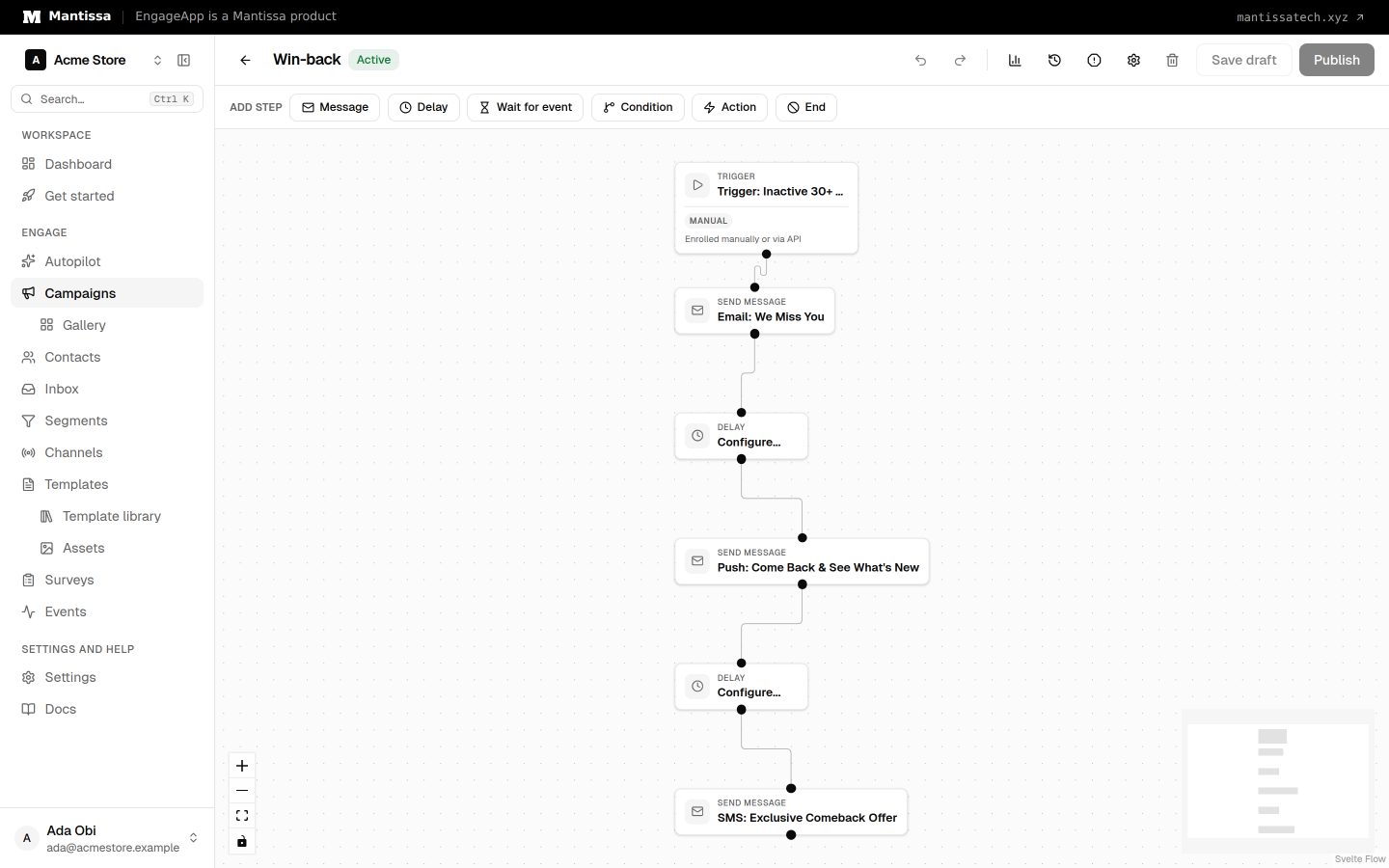
- Send an incentive, then persist. In the flow, add a send message step with an email offering an incentive to return. Follow it with a wait_until step on the
purchaseevent with a 7-day timeout. On the timeout → false edge, add a second send message step — an SMS reminder that lands where email might be ignored. - Set the conversion goal. Set the conversion goal to
purchaseso reactivations are tracked and buyers exit the flow.
Tips
- Make the incentive meaningful — win-back audiences have already ignored your regular messaging.
- Only include subscribed contacts so you respect opt-outs and protect deliverability.
- The wait_until timeout keeps the SMS from firing for anyone who already returned via the email.
Next steps
- Define the lapsed audience with segments.
- Enroll them using campaign triggers.
- Set up the SMS channel for the reminder.
Related
Segments
Group contacts by attribute and behavior rules to target campaigns and manual enrollments.
Triggers & enrollment
A trigger decides how contacts get enrolled into a campaign — manually, by event, on a schedule, or when they join or leave a segment.
Email channel
Send email through your own SMTP server or EngageApp managed email, authored with the visual MJML editor.
SMS channel
Send text messages through Twilio, Termii, BulkSMS, 5LinkxSMS, or Vonage — self-hosted or platform-managed.